










A call to empathy and hope

I See You

15 minutes that open space for listening. Screenings with conversation for parishes and ministries.

Bring it to my companyBefore you screen: read the Screening Pledge ↓

Help Line Global

Befrienders Worldwide, Global Suicide Prevention, with QR code to befrienders.org

Find a helpline in your country

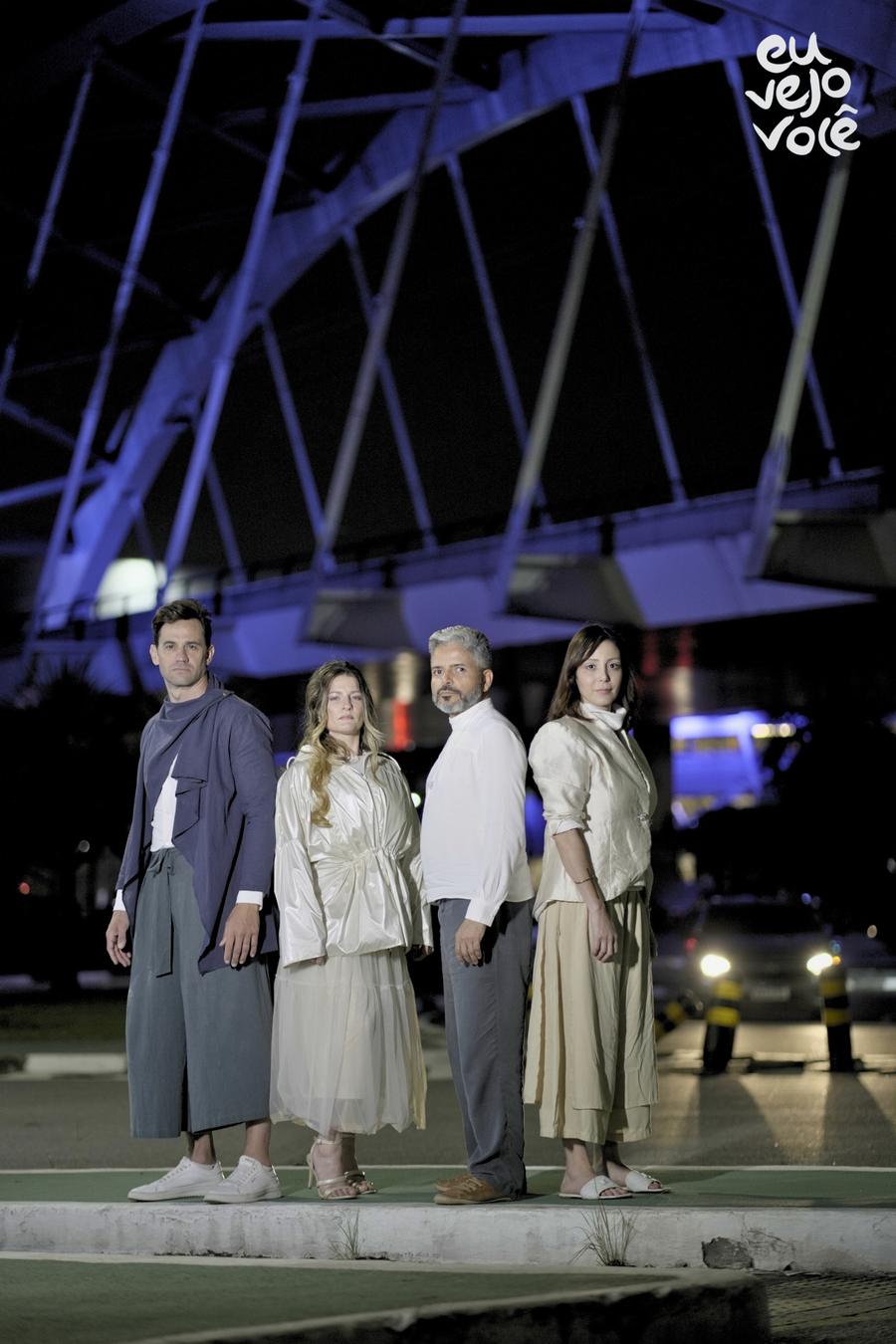
Four cast members of the film standing side by side at night, with blue lights in the background
Why now

Many people carry this in silence.

1 billion+people are living with a mental health condition.WHO, 2025
727,000deaths by suicide in 2021.It is the third leading cause of death among people aged 15 to 29 and more than 1 in every 100 deaths worldwide. WHO
15,500+suicides in Brazil in 2021: one death every 34 minutes.Brazilian Ministry of Health

How many of them walked through your parish last week without being seen?

Sources: WHO/PAHO, “More than a billion people live with mental health conditions,” 2025; WHO, Suicide worldwide in 2021; Brazilian Ministry of Health, Mortality Information System (2021).

Nobody needs ready-made answers. It all begins with presence and listening.

It all begins with presence and listening.

I See You. Running time: 14'59".

Watch with subtitles in your language

The film is in Portuguese and has subtitles in 19 languages, including English and Spanish.

  1. Press play and click the CC icon (subtitles) in the bottom bar of the video.
  2. Click the gear icon (Settings) › Subtitles/CC and choose your language.
  3. On a phone, tap the video, then the ⋮ or gear icon › Captions.

Tip: if you open the video on YouTube, the same menu is available there.

The short film

What happens when someone is truly heard.

I See You is a 15-minute short film about what happens when a person is truly heard. It was made to open a conversation, not to close one.

Co-production

  • Guerrini Island
  • CineHaven
  • Rushfy — audiovisual production company
The film

Scenes from the short film

Close-up of a man with a gray beard and a white high-neck T-shirt, looking up
A man standing on a concrete column among trees, his arm outstretched
Two women on a subway car: one gently touches the other's shoulder
Cine-Talk · Cinema, dialogue and transformation

How the screening works

1

Watch

The community watches the short film together, in a light and welcoming atmosphere.

2

Talk

Then comes a guided conversation, in a circle, with active listening.

3

Welcome

No one is required to speak, and no one needs ready-made answers. The conversation begins with presence and listening.

The conversation is not therapy and does not replace professional care. The Conversation Guide that comes with the screening is just below, and you can read it and print it. The screening of the short film is free.

Audience in a movie theater after the screening, pointing at the camera
An I See You Cine-Talk session: the film and the conversation circle bring the audience together.
Who it is for

For those who care for people.

Wesley Meoli, director of the film
The Director
“Storytelling is my tool to heal, connect, and transform.”

Wesley Meoli

Founder of MEOLI.TV, Wesley Meoli is a director and communicator with over 30 years in audiovisual production (DRT/SP 14.808 · MTB/SP 40.607). As a Humanitarian Civil Diplomat, Chaplain (Jethro International), and VP of Media at Abba Our Father Inc., he combines executive narrative precision with empathetic listening to spark dialogue and strengthen the human spirit.

Education & Leadership:
FAAP (Social Communication & Film Industry Management) | ESPM | SEDT Miami | UNILID Florida

Behind the scenes

Behind the cameras

Four cast members side by side at night, in front of a footbridge lit in blue
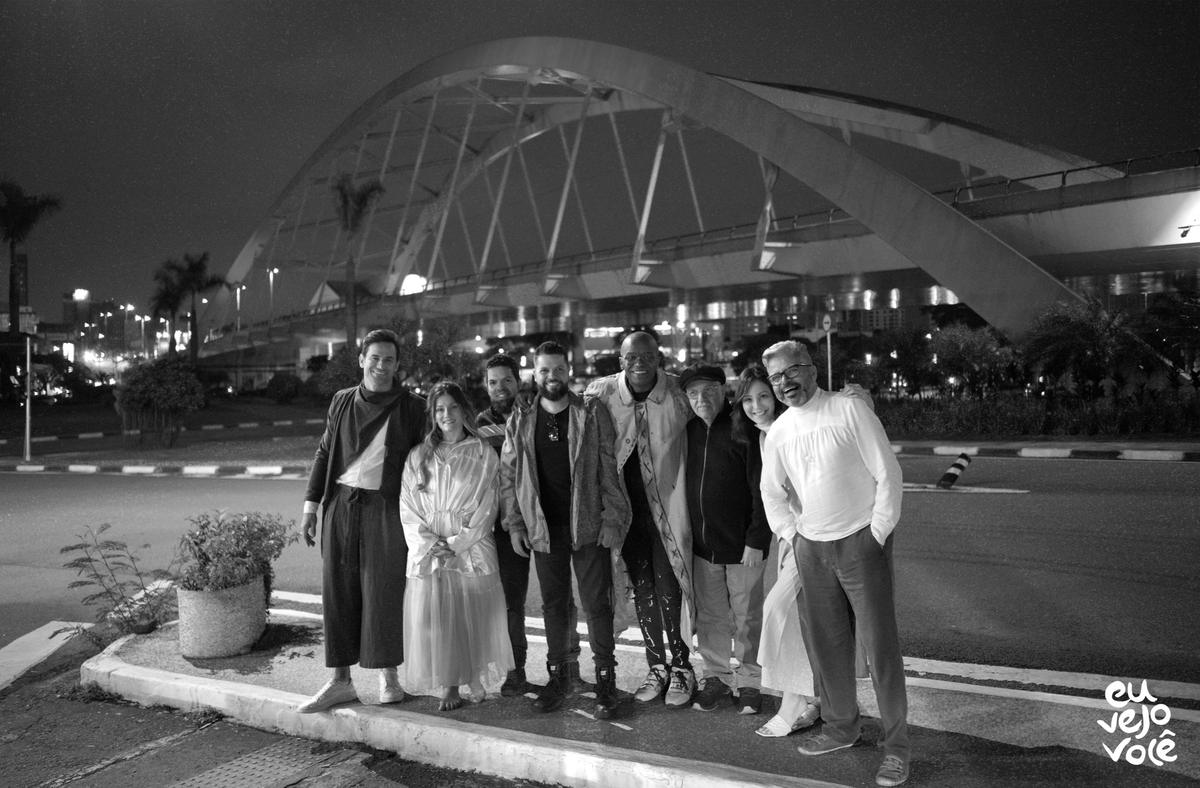
Cast and crew gathered under the footbridge, in black and white
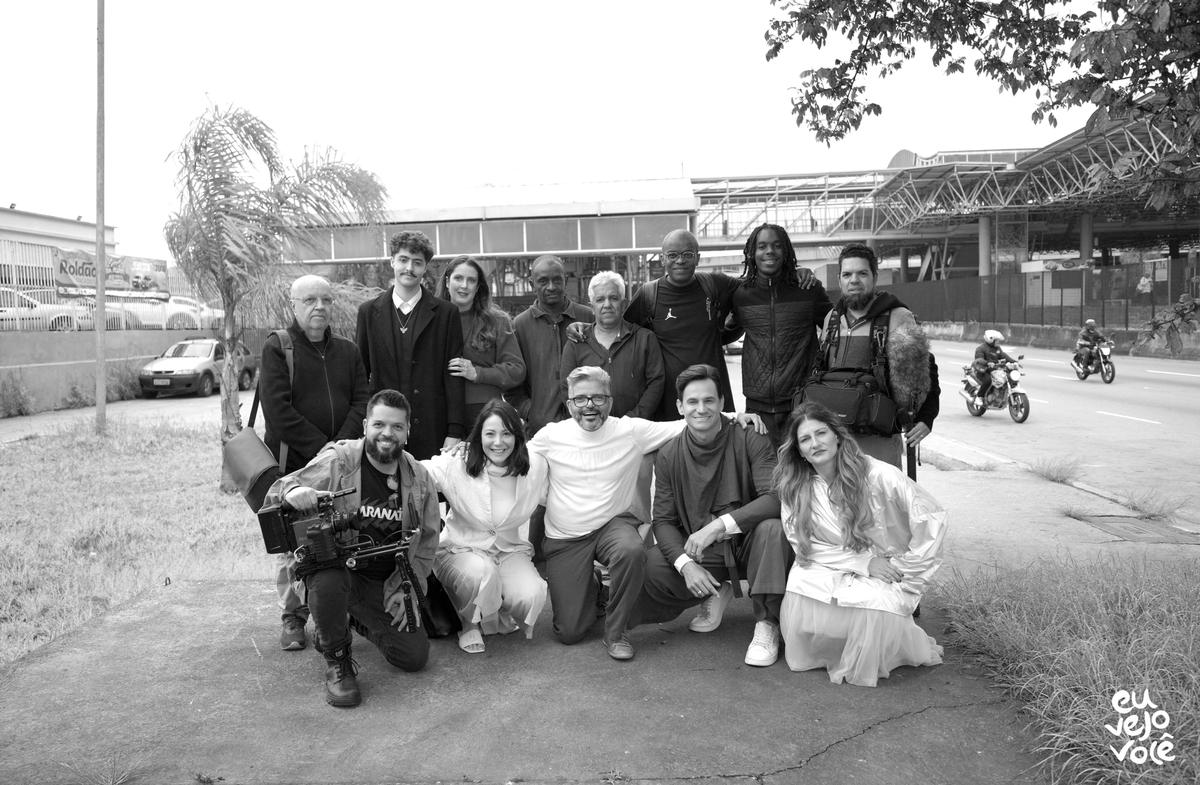
Black-and-white group photo of cast and crew in front of a station
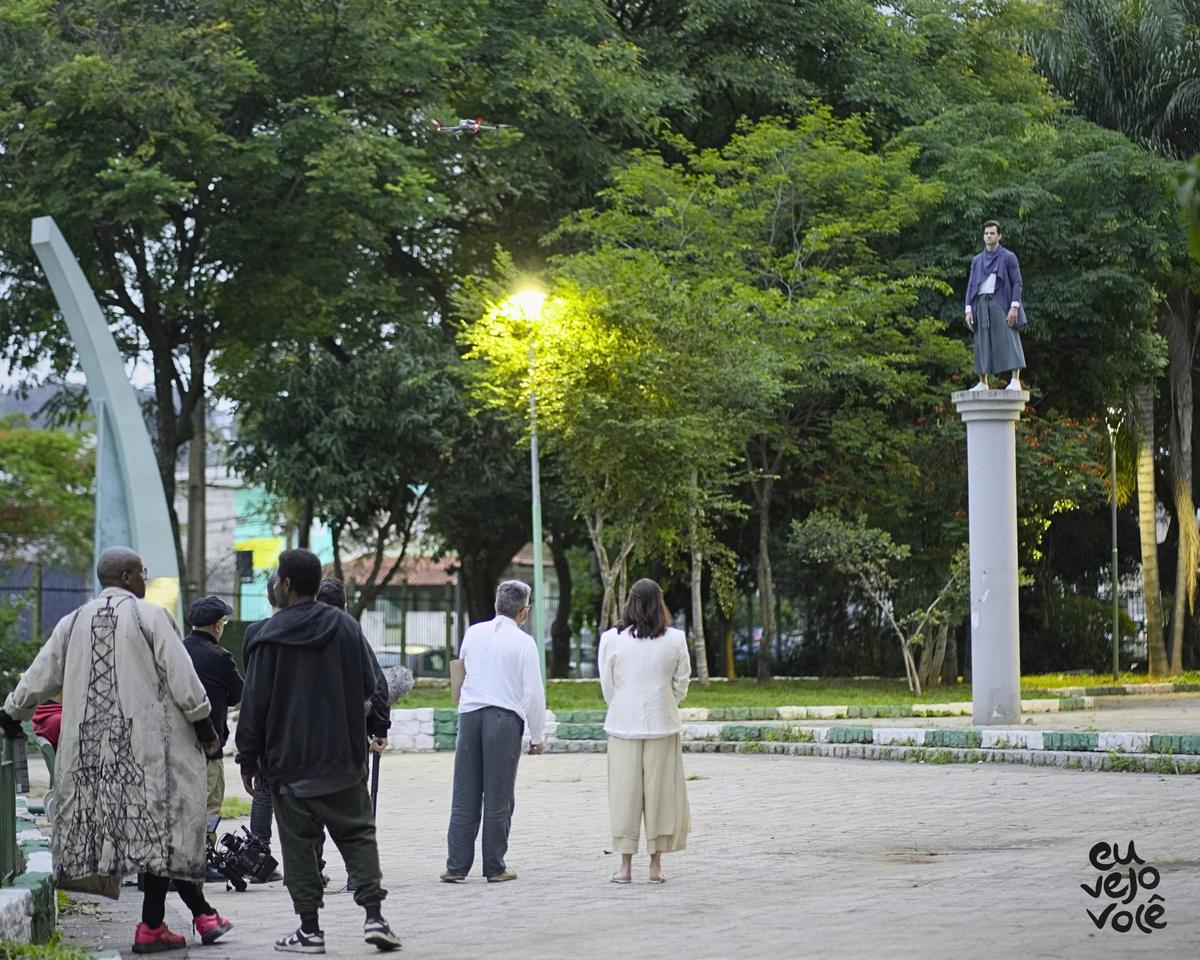
Crew in a park during filming, with a drone in the air and the actor on the column
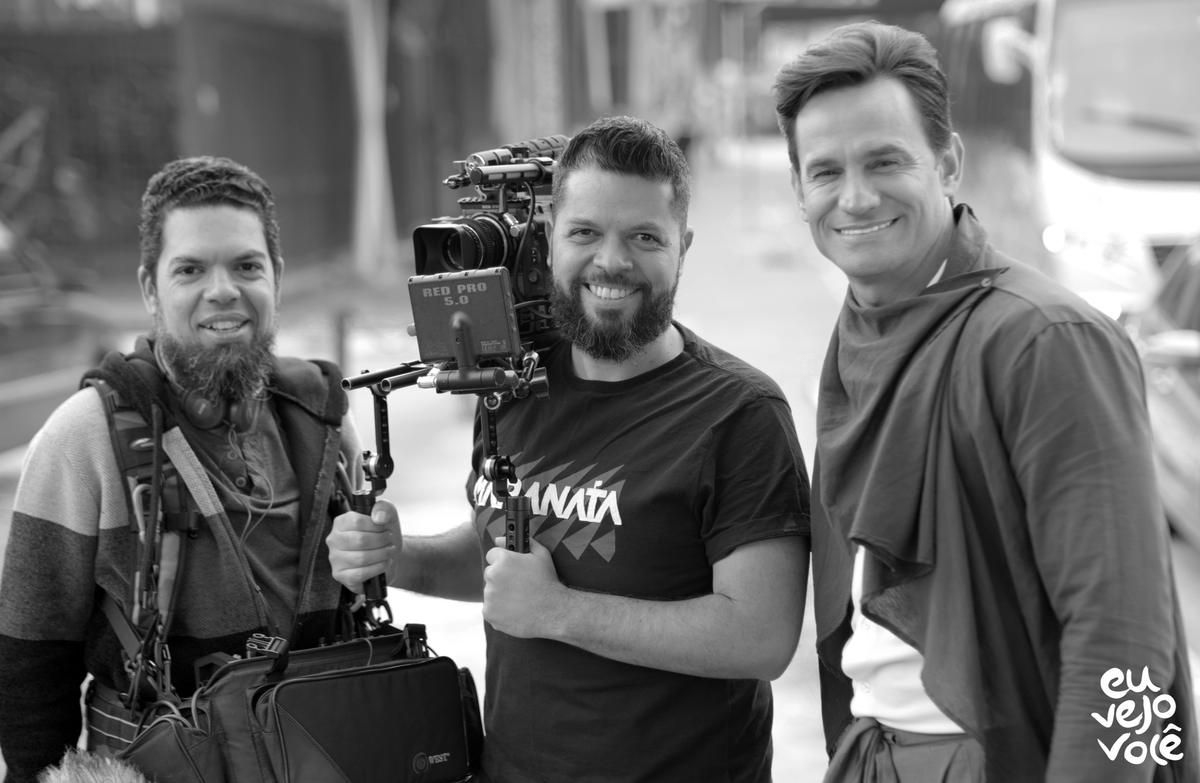
A sound technician, a camera operator with the camera on his shoulder and an actor, smiling, in black and white
Testimonials

Those who watched it, felt it.

Five guests smiling in front of the I See You panel at the film screening

Moved all over again!!!

Gisele

Congratulations on this beautiful, profound and preventive work!

Roberta

The approach was very sensitive and delicate. Congratulations.

Dagô · Itu, SP

Those who have lived it know… so important, starting with the title, hope in the form of an image. A beautiful message to be spread.

Nelson

The title, “I see you.” And the song at the end, joyful and full of hope, mattered.

Suzy

I am sure this message will bring God's Good News to many people.

Carlos

Messages sent in the chat of an online screening of the film.

Listening circle. Conversation Guide.

I See You Conversation Guide

A listening circle after the screening of the 15-minute short film. For those who lead the conversation in parishes, ministries and Catholic schools.

What it is for

The short film opens the conversation, and this guide helps sustain it with care. The goal is not to solve anyone's pain or to offer ready-made answers. It is to create a place where people can be heard. The starting point is presence, and answers, if they come, come later.

Before you begin

Set aside about 60 minutes:

15 minutes for the film, 5 for silence, 30 for the conversation circle and 10 for closing.

  • Arrange the chairs in a circle, with soft lighting. Preferably, groups of up to 20 people.
  • Agree with the parish on who will be the point person to accompany anyone who needs more support after the circle.
  • Keep at hand the contacts in the section “If someone needs more help.”
  • The person leading announces that the conversation is neither therapy nor confession.

Circle agreements (read aloud)

  1. No one is required to speak. Passing is also a way of taking part.
  2. Each person speaks for themselves, without being interrupted, advised or judged.
  3. Silence is welcome.
  4. We do not compare one pain with another.
  5. What is shared here is not discussed outside the circle.

Layered questions

Start with the first and move forward only if the group is comfortable. Any question can be answered with “I'd rather not answer.”

  1. Which image, scene or line from the short film stayed with you?
  2. At what moment of your week do you feel seen? And at what moment do you feel that no one notices?
  3. What tends to go unsaid among us?
  4. What would make our community a safe place to say “I'm not okay”?
  5. For pastoral teams — Who takes care of those who take care here?

How to lead

Do

  • Reflect back what you heard in simple words, such as “That sounds like it weighs heavily” or “Thank you for trusting the group with this.”
  • Accept silence without filling it.
  • Thank each person for speaking, without evaluating.
  • If someone cries, wait. There is nothing to fix.

Avoid

  • Giving advice, diagnoses or quick solutions.
  • Saying “It was God's will,” “God knows what He is doing” or “It could be worse.” These phrases can silence and wound.
  • Asking someone to share more than they chose to.
  • Interpreting the speaker's life or commenting on their family.
  • Promising that everything will be fine.

If someone needs more help

The circle welcomes, but it has limits. Seek professional help when the person:

  • cannot carry out daily activities;
  • seems to have lost touch with reality;
  • talks about hurting themselves, taking their own life or hurting someone else;
  • depends significantly on alcohol or other substances.

What to do

  • Talk in private, calmly and without making a scene. Ask, and listen.
  • If there is immediate risk, do not leave the person alone, and call your local emergency number (911 in the United States) or take them to an emergency room.
  • In the United States, call or text 988 (988 Suicide and Crisis Lifeline), free and available 24 hours a day.
  • If you are outside Brazil, contact your local crisis service or find your country's helpline at befrienders.org.
  • For regular follow-up, refer the person to the nearest public or community mental health service (in Brazil, a UBS or CAPS, through the public health system, SUS).
  • In Brazil: SAMU (192) for emergencies and CVV (188, cvv.org.br) for emotional support.
  • After the referral, stay close with a conversation, a visit or a prayer. Pastoral care does not end with the referral.

Help Line Global

Befrienders Worldwide, Global Suicide Prevention, with QR code to befrienders.org

Find a helpline in your country

Caring for those who care

The screening can be held only with the pastoral team, with catechists, ministers and volunteers. Those who accompany others also carry weariness and do not need to hide it. In that case, use question 5, set aside more time for the circle and agree on a next meeting.

Closing

  • Thank everyone for their trust.
  • Remind them that the conversation can continue in private with anyone who wishes.
  • If it makes sense for the community, end with a moment of silence or a brief prayer, without requiring everyone to take part.
  • Repeat the help contacts.

This material is educational and meant for welcome and support. It is not therapy and does not replace professional care. It was inspired by the principles of the guide Mental Health and Pastoral Accompaniment in the Context of Humanitarian Crises (2026), prepared in collaboration with the Dicastery for Promoting Integral Human Development.
Eu Vejo Você®. Instagram @olaeuvejovoce | euvejovoce.org


For those who have lost someone to suicide

Postvention: what to do after a suicide loss in a community.

For facilitators who have already read the Conversation Guide and have a local point person to accompany anyone who needs more support.

This material is not therapy and does not replace professional care.

Avoid narrating details of the suicide, to prevent contagion.

If there is immediate risk, do not leave the person alone and call your local emergency number (911 in the United States) or 988 Suicide and Crisis Lifeline.

After a suicide loss, the community also needs care. The pain of those left behind is marked by unanswered questions, guilt, anger and silence — and it needs a place to be spoken, without judgment and without rushing for answers.

This guide is for those who will facilitate a welcoming meeting after a suicide loss in a parish, ministry or community. It is not therapy and does not replace professional care. It is a guided welcoming meeting, with active listening, legitimate silence and presence.

  1. Meeting objectives — Create a place where people can talk about what they feel, without being judged, and leave with a support network.
  2. Opening — Building the space — Agree that no one is required to speak, that silence is welcome, and that what is shared here is not discussed outside the circle.
  3. Recognition and validation of the experience — Welcome ambiguous feelings — guilt, anger, confusion, longing — without trying to correct or explain them.
  4. Empathy and welcome — Guided reflection — Listen with presence, reflect back what was heard in simple words, and do not seek the “why” of the loss.
  5. Turning pain into a collective gesture — Close with a symbolic gesture in memory of the one who is gone and with a path of continuity: who to seek, where to get help, when to talk again.
  6. Closing — Path of continuity — Repeat the help contacts and confirm who is the local point person.

Download the full guide (PDF)

Material prepared by Roberta Barni — Psychologist Specializing in Grief and creator of the Systemic Grief Approach. Instagram: @robertalutosistemico

Partners

  • Instituto Koziner
  • Instituto Spelter
  • AGD
  • IRMA — Instituto de Recuperação Missão Amor
  • IMG — Instituto Milton Gobbo
  • Luto Sistêmico
  • Raízes Instituto
  • TouchPeace Global Mission

Institutions that support I See You and the work of listening and welcome in communities.

Frequently asked questions

I See You is a short-film screening followed by a guided conversation, created to encourage presence, active listening and meaningful conversations in community.

Yes. Community screenings in parishes are free, under the project's conditions. Corporate presentations help make those sessions possible.

No. The experience is not therapy, confession or clinical care, and it does not replace professional support.

The full session lasts 60 minutes: about 15 minutes for the film, 5 minutes of silence, 30 minutes of guided dialogue and 10 minutes of closing.

The recommended format fits groups of up to 20 people, with chairs in a circle and a local contact person, as described in the Conversation Guide.

StoryHealing is a narrative method developed by Wesley Meoli to look at your own story, find meaning in what you lived, and rewrite the narrative from what you learned, not from the pain. Learn about the keynote.

It is not about discovering why you lived what you lived. It is about what you can learn from what you lived.

Workplace regulations ask companies to map psychosocial risks at work. I See You creates the place where that risk can be spoken, with active listening and a guided conversation circle. The screening does not replace a psychosocial risk assessment, a risk management program, occupational health services, or psychological support.

No. Corporate screenings are paid. They help make the free parish screenings and the project's mission work possible.

It is a 60-minute keynote by director Wesley Meoli, for companies and conferences, based on the StoryHealing method. The Power of Your Story invites you to discover the purpose behind what you have lived. It is not about discovering why you lived what you lived. It is about what you can learn from what you lived.

No. The keynote is not therapy, is not family constellation, and does not replace professional support. It is a narrative talk of inspiration and listening, to look at your own story from what you learned, not from the pain.

Let's talk

Want to bring it to your parish?

Tell us who will take part and we will agree on a date and format. Screenings in parishes are free and missionary.

Screening Pledge

Don't screen it until you have read the Guide.

  • I have read the Conversation Guide.
  • I have a local point person to accompany anyone who needs more support.
  • I know where the nearest UBS/CAPS (public mental health service) is.

The conversation is not therapy, is not confession and does not replace professional care.

Or write to [email protected]

On the streets

I See You Movement

A street action that can be replicated to reach people with a message of hope: God the Father sees us.

Running time: 1'36".